
Andrej Babiš’s ANO movement has returned to power in the Czech elections, forming a coalition with right-wing parties. On 4 December 2025, the Foreign Policy Research Institute reported that ANO received 34.5 percent in the October 2025 parliamentary elections, forming a government with the SPD, Freedom and Direct Democracy, and the Motorists party. The article begins:
The Czech Republic, in a widely predicted result, returned former Prime Minister Andrej Babiš and his ANO movement to power in parliamentary elections held in early October of 2025. While the outcome of the polls was clear, several key questions remain surrounding the causes and ramifications of Babiš’ political resurgence: What went wrong for the coalition government of outgoing Prime Minister Petr Fiala; How will Babiš and his party rule in a coalition with two right-wing parties; What role will President Petr Pavel play in potentially mitigating more extreme policy proposals of the new government, and; What does an ANO-led regime in Prague mean for relations with its neighbors, Brussels, and Washington?
Key Points
- SPD Freedom and Direct Democracy party slated to lead Ministry of Defense despite being an avowedly anti-NATO party, with leader Tomio Okamura elected speaker of the lower house in a secret ballot with 107 votes on November 5, 2025, initially set to receive the Ministry of Interior before Babiš cancelled the plan.
- ANO senior official Alena Schillerová stated in an early 2024 television interview that she couldn’t imagine ANO forming a government with SPD, as ANO wanted to withdraw from the EU. Yet SPD is now part of the coalition, filling several important positions, including the defense ministry and the post of parliament speaker.
- Motorists for Themselves, a party campaigning on an anti-environmental platform, received almost 7 percent, with leader Petr Macinka nominated for foreign minister after a controversial June 2025 comment that green blood would flow at the Ministry of Environment if the party joined the cabinet.
- President Petr Pavel, polling as the nation’s most popular political figure, is using constitutional authorities to ensure the incoming government doesn’t damage relationships with NATO and the EU, stating on November 17 that, in the absence of a satisfactory resolution of Babiš’s conflict of interest, ANO should propose a new prime minister candidate.
Global National Conservative Alliance Expands Across Eastern Europe
The Global National Conservative Alliance has established a powerful Eastern European axis, with Hungary serving as the operational hub for a transnational coalition spanning the Czech Republic, Poland, Austria, Romania, Bulgaria, and Slovakia. Viktor Orbán launched Patriots for Europe in June 2024 alongside Austria’s Freedom Party and the Czech ANO movement, rapidly assembling the European Parliament’s third-largest grouping. The German Marshall Fund notes that far-right parties are now in government in Croatia, Finland, Hungary, Italy, and Slovakia, with additional parties performing well in Bulgaria, Czechia, Poland, and Romania.
In the Czech Republic, billionaire Andrej Babiš’s ANO movement claimed its greatest election victory in October 2025, steering the country toward a pro-Russian path and threatening to end support for Ukraine. Babiš has joined forces with Orbán and Slovakia’s Robert Fico, whose countries refuse to provide military aid to Kyiv. Poland will become the second European country to host CPAC later this year, amid strong ties between Polish conservatives and the Trump administration. Romania’s Alliance for the Union of Romanians transformed from obscurity in 2020 into a significant political force promoting traditionalist values and unification with Moldova.
Bulgaria mirrors these patterns, with pro-Russian parties, including the far-right Revival movement, securing approximately 15% of votes in the 2022 elections. Revival leader Kostadin Kostadinov demands Bulgaria exit the EU and NATO while invoking the threat of “globalism”—a major theme throughout the GNCA. The Stiftung Wissenschaft und Politik observes that if ANO wins power in the Czech Republic, a new far-right Visegrád trio could form with Hungary and Slovakia. CPAC Hungary conferences unite these forces annually, where speakers from across Eastern Europe exchange tactics for institutional capture alongside American conservatives.
External References:
• No Tidal Wave but Creeping Influence: The Far Right in the European Parliamentary Elections – German Marshall Fund
• The Creeping Integration of Far-right Parties in Europe – Stiftung Wissenschaft und Politik
• The year of elections: The rise of Europe’s far right – International Bar Association
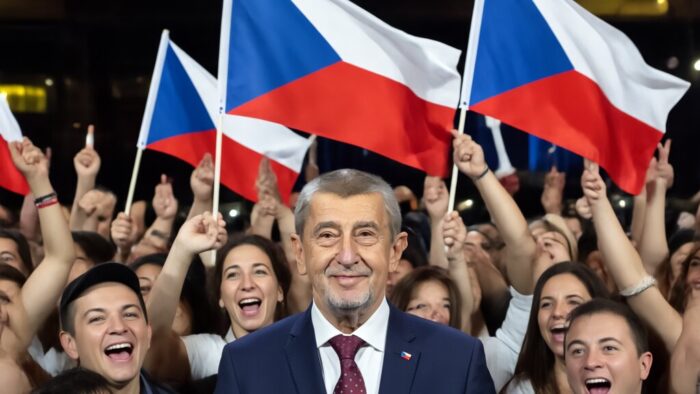
Disclaimer: The Global Influence Operations Report (GIOR) utilizes AI throughout the posting process, including the generation of summaries for news items, introductions, key points, and, often, the “context” section. We recommend verifying all information before use. Additionally, all images are generated using AI and are intended solely for illustrative purposes. While they represent the events or individuals discussed, they should not be interpreted as real-world photography.








 PREVIOUS POST