
A pro-Kremlin bloc in the European Parliament has nearly doubled in size. On 26 November 2025, Novaya Gazeta Europe reported that around 84 deputies now routinely vote against Russia-critical resolutions, with a further 62 abstaining, compared to 40 opposing in the previous parliament. The article begins:
The new European Parliament, elected in June 2024, has shifted further to the right, with conservative and nationalist parties gaining ground and forming two new groupings — Patriots for Europe (PfE) and Europe of Sovereign Nations (ESN). Since taking office, the new parliament has voted on at least 14 resolutions concerning Russia and Ukraine — an early test of how its fresh line-up approaches foreign policy. Drawing on these voting records, EUobserver and Novaya Gazeta Europe have formulated an updated ranking of the most pro-Kremlin parties and MEPs.
Read more: https://novayagazeta.eu/articles/2025/11/26/moscows-minions-en
Key Points
- Germany’s Sahra Wagenknecht Alliance leads pro-Kremlin voting, with almost every vote by its six MEPs either against or in abstention on 14 resolutions analyzed, joined by a bulk of pro-Kremlin votes from France’s Rassemblement National, Germany’s AfD, Hungary’s Fidesz, and Italy’s Five Star Movement.
- Rassemblement National’s share of votes against and abstentions on 14 Russia-critical resolutions climbed back to 67% after dropping to 57% following the 2022 invasion, supporting symbolic texts condemning history falsification but withholding backing for increased EU aid to Kyiv.
- AfD pro-Kremlin vote share climbed back to nearly 90% in the new parliament after becoming less predictable following February 2022, with Hungary’s Fidesz voting against seven of 14 resolutions after opposing just two of 30 in the previous convocation.
- Slovakia’s SMER-SD MEP Ľuboš Blaha stands out as the most consistent Kremlin sympathizer, justifying the 2014 annexation of Crimea and visiting Russia twice since becoming an MEP in 2024, where he met with Russian foreign intelligence chief Sergey Naryshkin.
Russia’s Influence Operations in Europe: Elections, Religion, and Far-Right Networks
Russia’s influence operations across Europe have intensified through a convergence of election interference, religious networks, and far-right political cultivation. The Kremlin’s campaign targets democratic processes from the Baltics to the Balkans, deploying coordinated disinformation, illicit financing, and digital manipulation to destabilize pro-European governance. Romania’s Constitutional Court annulled the 2024 presidential election after intelligence services uncovered massive TikTok-based interference supporting far-right candidate Călin Georgescu, while Moldova faced an estimated €200 million Russian spending campaign aimed at derailing EU integration. Carnegie Endowment analysis confirms this reflects systematic operations designed to manufacture electoral chaos through phantom polls, deepfake audio, and covertly staged recordings.
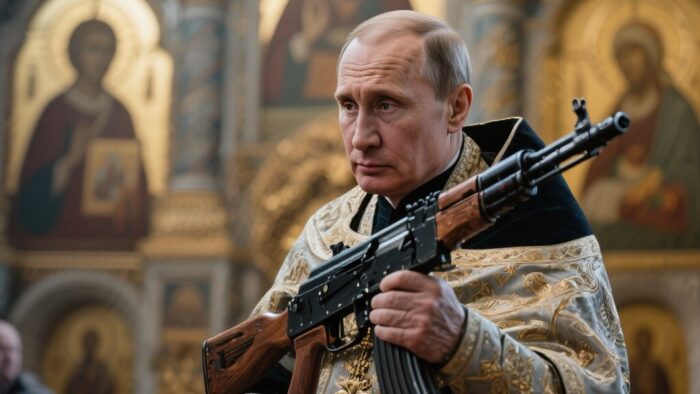
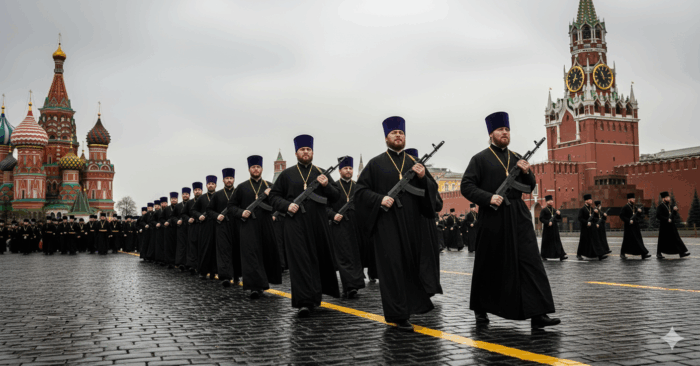
The Russian Orthodox Church has emerged as a cornerstone of Kremlin strategy for projecting soft power across Europe. In the Baltic states, Moscow targets Russian-speaking minorities through church networks that amplify messaging about traditional values and civilizational struggle against the West. Estonia’s parliament responded by passing legislation requiring the Estonian Orthodox Church to sever ties with the Moscow Patriarchate. The Serbian Orthodox Church similarly serves as Moscow’s intermediary in the Balkans, facilitating high-level political coordination when diplomatic channels prove insufficient.
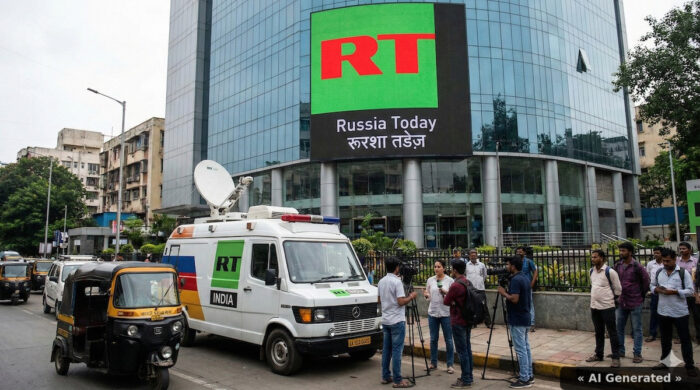
Beyond religious institutions, leaked documents reveal oligarch-backed organization Tsargrad’s cultivation of far-right parties in Italy, France, Germany, and Austria. Cyber operations like Ghostwriter target Baltic audiences with anti-NATO narratives, while Rossotrudnichestvo trains foreign journalists at RT and Sputnik. GLOBSEC research confirms Russian bot networks deployed Doppelganger operations during Poland’s 2025 election, though a strong public consensus against pro-Kremlin narratives limited their effectiveness. The EU’s EEAS reports that Russia allocated 137 billion rubles for state media in 2025, underscoring the Kremlin’s commitment to sustained information warfare against European democracies.
External References:
• Moldova’s Election Is a Test for Russian Influence in Europe – Carnegie Endowment
• 3rd EEAS Report on Foreign Information Manipulation and Interference
• The Kremlin’s Double Game: Russian Attempts to Influence Poland’s 2025 Election – GLOBSEC
Disclaimer: The Global Influence Operations Report (GIOR) utilizes AI throughout the posting process, including the generation of summaries for news items, introductions, key points, and, often, the “context” section. We recommend verifying all information before use. Additionally, all images are generated using AI and are intended solely for illustrative purposes. While they represent the events or individuals discussed, they should not be interpreted as real-world photography.










 PREVIOUS POST