
The Trump administration has released the National Security Strategy, explicitly supporting far-right nationalist parties in Europe. On 5 December 2025, The Guardian reported that a document signed by Trump states Europe faces civilisational erasure within two decades, calling for the US to cultivate resistance within European nations. The article begins:
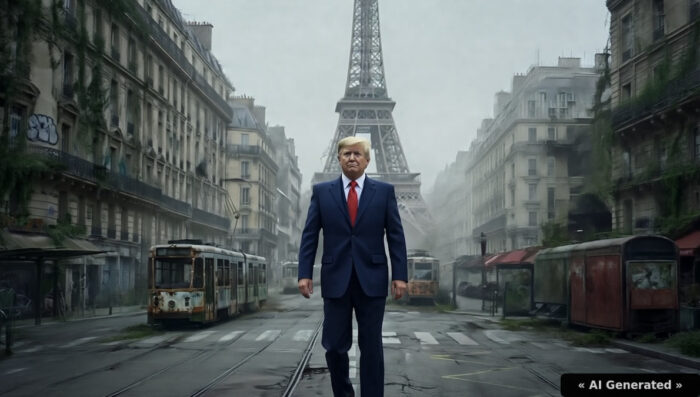
Donald Trump’s administration has said Europe faces “civilisational erasure” within the next two decades as a result of migration and EU integration, arguing in a policy document that the US must “cultivate resistance” within the continent to “Europe’s current trajectory”. Billed as “a roadmap to ensure America remains the greatest and most successful nation in human history and the home of freedom on earth”, the US National Security Strategy makes explicit Washington’s support for Europe’s nationalist far-right parties.
Key Points
- Document states Europe’s real problems include activities of the EU that undermine political liberty and sovereignty, migration policies transforming the continent, censorship of free speech and suppression of political opposition, and loss of national identities, with policies requiring cultivating resistance to Europe’s current trajectory within European nations.
- Strategy appears to espouse the great replacement conspiracy theory, saying several countries risk becoming majority non-European, and Europe faces a real and stark prospect of civilisational erasure, adding that if present trends continue, the continent will be unrecognisable in 20 years or less.
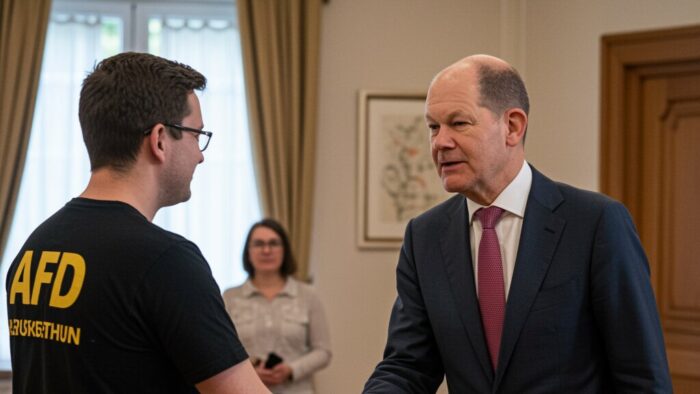
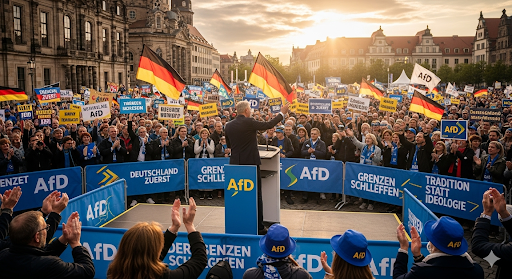
- The document says the growing influence of patriotic European parties gives cause for great optimism, with the Trump administration repeatedly seeking to foster closer ties with nationalist parties, including Germany’s AfD, whose senior party figure visited the White House in September for meetings with senior officials.
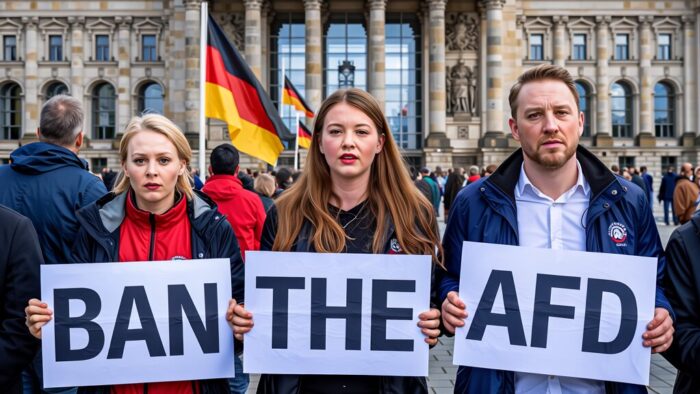
- Germany’s foreign minister, Johann Wadephul, responded that the US remains a vital ally on security, but questions of freedom of expression or organisation of free societies do not fall into that category, stating we do not need outside advice on these matters.
Trump Administration and the Global National Conservative Alliance: Forging Europe’s Far-Right Network
The Trump administration has forged a transatlantic coalition with European far-right movements spanning multiple countries, united by opposition to migration, climate policy, and supranational governance. This network crystallized through the Patriots for Europe parliamentary bloc launched in June 2024, which rapidly became the European Parliament’s third-largest grouping with parties from 14 member states representing over 15 million voters—including Marine Le Pen’s National Rally in France, Matteo Salvini’s League in Italy, Geert Wilders’ Party for Freedom in the Netherlands, and Austria’s Freedom Party.
Italian Prime Minister Giorgia Meloni attended Trump’s January 2025 inauguration alongside figures from Germany’s AfD, seeking to position herself as Europe’s key transatlantic interlocutor. The Carnegie Endowment notes that radical-right parties now participate in governments across five EU member states—Croatia, Finland, Hungary, Italy, and Slovakia—while advancing in Germany, France, and the Netherlands. At CPAC conferences held in Budapest and Poland, Trump, Tucker Carlson, and European leaders including Spain’s Santiago Abascal and the Czech Republic’s Andrej Babiš have exchanged tactics for institutional transformation and media control.
The institutional architecture connecting these movements includes the Heritage Foundation’s collaboration with Hungarian think tanks on policy frameworks attacking EU regulations, while the Mathias Corvinus Collegium hosts American conservatives and operates influence campaigns in Brussels. The ECFR observes that this convergence means liberal Europeans now face pressure on two fronts: internally from emboldened far-right parties, and externally from U.S. leverage through connections to European political allies.
Significant tensions persist within this alliance over trade tariffs that threaten European industries and divergent positions on Russia and China. MAGA’s effort to lead the Global National Conservative Alliance exposes rifts between American protectionism and European economic interests, while parties like Germany’s AfD maintain closer ties to Moscow than Washington on energy policy.
External References:
• The European Radical Right in the Age of Trump 2.0 — Carnegie Endowment
• When Culture War and Trade War Clash: Trump’s Troubled Alliance with Europe’s Far Right — ECFR
• The Paradox of Europe’s Trumpian Right — Foreign Affairs
Disclaimer: The Global Influence Operations Report (GIOR) utilizes AI throughout the posting process, including the generation of summaries for news items, introductions, key points, and, often, the “context” section. We recommend verifying all information before use. Additionally, all images are generated using AI and are intended solely for illustrative purposes. While they represent the events or individuals discussed, they should not be interpreted as real-world photography.







 PREVIOUS POST