
Russian propaganda operations are expanding in Latin America through RT workshops and covert campaigns. On 10 December 2025, The Fulcrum reported that the RT CompaRTe initiative held training events in at least eight Latin American countries, training over 1,000 journalists, while the US Department of Justice seized domains linked to the Doppelgänger operation. The article begins:
Amid political unrest ahead of Mexico’s 2024 presidential election —between late 2023 and early 2024—, Russian state media outlet Russia Today (RT) launched a street-level promotional campaign in Mexico City. Posters appeared in Metro and Metrobús stations, encouraging commuters to scan a QR code to watch the channel’s newscasts. The promotion drew scrutiny in Mexican media, which noted that the European Union and companies such as Google had blocked RT for spreading pro-Putin narratives and disinformation about Russia’s invasion of Ukraine, which began Feb. 22, 2022.
Read more: https://thefulcrum.us/governance-legislation/rt-lavadora-propaganda-workshops-latin-america-us
Key Points
- RT CompaRTe initiative held training events over the past three years in at least eight Latin American countries, including Mexico, Argentina, Colombia, Venezuela, Nicaragua, Cuba, Guatemala, and Panama, with more than 1,000 journalists and media workers participating in workshops and exchange programs covering source management, artificial intelligence, and fact-checking.
- The US Department of Justice seized 32 internet domains linked to the Doppelgänger operation in September 2024, with Russian companies Social Design Agency and Structura National Technology allegedly cloning government and media websites to spread anti-Ukraine narratives and influence the 2024 US presidential election.
- Seized document indicates SDA included Mexico in disinformation plans under Operation México No Perdona, intending to encourage anti-American sentiment and exacerbate confrontation between the United States and Mexico, with campaign goal to influence the US Presidential Election despite targeting Mexico.
- RT Spanish-language content currently airs in 18 Latin American countries, with at least 81 cable providers carrying RT in Mexico, while Telsusa broadcasts over open digital television, claiming coverage in 15 of 32 Mexican states and reaching a potential audience of 11 million households.
Russia’s Influence Operations in Latin America: How the Kremlin Dominates Spanish-Language Media
Russia has built a formidable influence operation infrastructure across Latin America, with its Spanish-language media outlets outperforming US counterparts by a three-to-one ratio. Actualidad RT, the Spanish-language offshoot of Russia Today, has amassed over 18 million Facebook followers and nearly 6 million YouTube subscribers, far exceeding the English-language version, which is banned across Western countries. The network maintains 200 Spanish-speaking employees with offices in Venezuela, Cuba, and Argentina, and ranked second among Spanish-language news channels on YouTube.
These operations have proved remarkably successful in shaping regional sentiment. A Georgetown University study documented a notable increase in pro-Russian sentiment through Spanish-language social media since Russia’s 2022 invasion of Ukraine, with anonymous accounts displaying coordinated pro-Kremlin messaging. The viral #IStandWithPutin campaign demonstrated that influence operations succeed where antipathy for the West runs deep, with researchers warning that Western analysts may be missing battles fought in non-English information spaces. A CSIS analysis found RT en Español ranked second in Colombia and ninth in Chile for X influence, while the US Voice of America failed to reach the top 100.
The Kremlin’s strategy extends beyond overt media operations. A U.S. State Department investigation exposed covert campaigns spanning at least 13 Latin American countries, where Russian PR firms recruit local journalists and influencers to launder pro-Kremlin content through indigenous media. Even after RT’s top Latin American propagandist Inna Afinogenova resigned over Ukraine, former RT journalists continue amplifying Moscow’s narratives through progressive Spanish-language outlets. The Atlantic Council’s Digital Forensic Research Lab documented how Russian ambassadors tailor messaging to local contexts, emphasizing anti-colonial themes that resonate with regional audiences suspicious of Western influence.
External References:
• Ukraine’s Narrative War: Combating Russian Disinformation in Latin America and the Caribbean
• In Latin America, Russia’s Ambassadors and State Media Tailor Anti-Ukraine Content to the Local Context
• The Kremlin’s Efforts to Covertly Spread Disinformation in Latin America
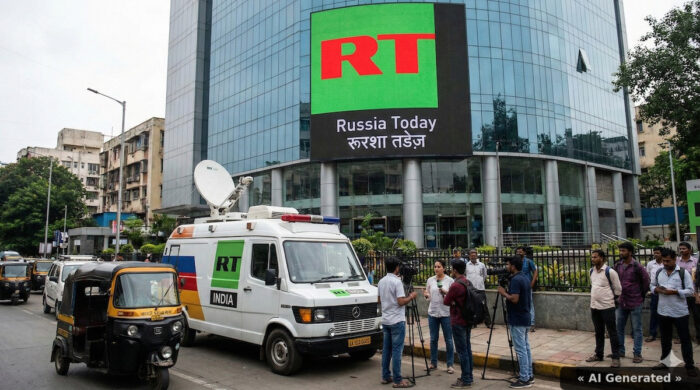
Disclaimer: The Global Influence Operations Report (GIOR) utilizes AI throughout the posting process, including the generation of summaries for news items, introductions, key points, and, often, the “context” section. We recommend verifying all information before use. Additionally, all images are generated using AI and are intended solely for illustrative purposes. While they represent the events or individuals discussed, they should not be interpreted as real-world photography.









 PREVIOUS POST